Wednesday, October 31, 2012

We Can Have Our Carbon And Eat It Too

There’s an old expression in English, “He wants to have his cake and eat it too,” used to describe someone who wants to enjoy each of two contradictory things.  The saying might apply, for example, to someone who is a spendthrift throughout his life but also wants a handsome retirement fund at the end or, a government imposing confiscatory taxes on business but, wanting a vigorous economy as well.
In the environmental world a product exists, biochar, that may allow earth’s citizens to “Have their cake and eat it too.”

Biomass from thinning the forest for health and fire reduction could be used to create biochar, synfuels, and other products.
Biochar is hardly anything new.  Most famously the use of the material to enhance poor soils is attributed to the indigenous natives of the Amazon basin who are said to be responsible for some of the deep, rich soils found in some areas of the basin.
Biochar is produced by heating biomass in a very low, or even a, no oxygen, environment, an environment in which combustion does not occur.  The process is called pyrolysis.  In the pre-industrial world biochar was created both deliberately and accidentally (shovel a pile of dirt over a still burning camp fire and some biochar will result. 
When the conditions necessary to create biochar are present oils and syngas are produced.  The material left after the volatiles have been driven off is called “char.”
In an uncontrolled setting the oils and gasses are emitted to the atmosphere or absorbed into soil as what we today call pollution but, in an industrial setting the oils and gasses can be captured and used to create a host of high value products.
But the real “magic” in the process comes because the char can be worked into agricultural soils as an amendment capable of significantly improving productivity and, research seems to show, working over time to actually capture greenhouse gasses from the atmosphere.
In short, the research seems to show that creating biochar is actually a carbon negative process.  Oils and syngasses are captured and utilized in place of fossil fuels like petroleum while the char, worked into the soil, eventually captures more carbon than was contained in the biomass in the first place.
The implications are obvious.  In the forests of North America, for example, several hundred million acres of trees grow in overcrowded forests prone to massive fires.  In Washington State this year climate change gas emissions, toxic chemical and elemental emissions and particulate emissions to the atmosphere may have resulted in pollution exceeding all the industrial and auto related pollution created in the entire state for a year or more.
But what if the forests were to be thinned, as most professionals believe necessary, with the biomass used to create synthetic oil to fuel our vehicles, natural gas substitutes to heat our homes, and biochar to absorb the carbon emissions that must occur in the course of man’s living on the planet?  What if, in nations where most of the wood grown ends up fueling home fires, the fuel could be diverted to produce biochar with the resulting oils and gasses heating homes and the char going into the soil to enhance food production?

The pop-environmental community appears to prefer this.
Stunningly, there is little impetus among the pop-environmental community to press forward with investigations into the many benefits bio-char appears to offer.  One would think, if people who think of themselves as environmentalists were really interested in environmental enhancements, there would be massive pressure on the governments of the world to step up research and, if the conclusions are as favorable as initial investigations appear to indicate, to begin large scale production.
But then, there’s not much money for activist groups in actually solving problems.  In fact, resolving a large scale environmental problem is, in terms of the climate change discussion, revenue negative, for the pop-enviros so, don’t expect to see much excitement about a potentially paradigm changing solution to carbon emissions in the environmental community.  
We can only hope that someday we will actually get serious about environmental enhancement. 


Sunday, October 21, 2012

Between about 1861 and 1906 American satirist Ambrose Bierce published a series of satirical definitions skewering the conventions of his day.  Eventually published as The Devil’s Dictionary, Bierce’s work is still read today; albeit the definitions are dated by the passage of time.
I’ve been working for some time on a work titled,The Devil’s Dictionary Too.  Updating a few of Bierce's definitions and, creating some of my own.
I thought you might enjoy a few of the definitions I’ve come up with regarding political and environmental issues.
Hopefully the book will be published next year.
Enjoy.
 Abnormal, adj.  One who thinks before accepting the precepts of an activist organization; especially an organization dedicated to environmental causes.
Usage:  Ann’s insistence on proof that the red whales of Mars really are an endangered species was seen as abnormal by fundraisers for the Save The Red Whales Of Mars Society.  “Not a single red whale has ever been found in the oceans of Mars,” the society scientists put forward in answer to Ann’s inquiries.  “Proof that global warming has endangered an entire species and that Ann is not quite normal in questioning our ethics.”
Bush’s Fault, n.  A geological feature recently discovered beneath Washington D. C. with branches running beneath both the White House and the nation’s legislative chambers.  The feature is commonly considered to be the source of all social, political and geophysical disruption worldwide (See Climate Change). 
Usage:  The discussion surrounding the size of the national debt caused seismic disruptions  (attributable to Bush’s Fault) in the ability of Congress to do business as usual.
Checks and Balances, n.  The American system of assuring all citizens have a chance to participate in their government.  Congress writes the checks and taxpayers are expected to provide the balances. 
Climate Change, n.  1. A meteorological phenomena many attribute to Bush’s Fault.  2. A rainmaker for fundraisers raising money to support the efforts of political parties and pop-environmental groups. 
Usage:  The recent ice age ended as the result of climate change brought about by the invention of coal fired power plants and the subsequent shipment of coal from Wyoming to China by Cro-Magnon man. 
Global Cooling, n.  1. A meteorological phenomena many attribute to Bush’s Fault.  2. A rainmaker for fundraisers raising money to support the efforts of political parties and pop-environmental groups. 
Usage:  First identified in the 1950s (but still the result of Bush’s Fault) as the likely end to life as we know it in North America due to the mile deep sheet of ice predicted to cover the entire continental plate sometime near the end of the century.
Global Warming, n.  1. A meteorological phenomena many attribute to Bush’s Fault.  2. A rainmaker for fundraisers raising money to support the efforts of political parties and pop-environmental groups. 
Usage:  First identified when fundraising to fight global cooling became difficult, global warming is seen as the likely end to life as we know it in North America due to the one mile rise in ocean depth created as the result of Bush’s Fault and predicted to cover the entire continental plate sometime near the end of the century.
Hybrid, n.  An automobile powered by electricity created mostly by the burning of fossil fuel invented to replace automobiles powered mostly by the burning of fossil fuel.
Usage:  As Gwen plugged in to the publically subsidized battery charger she sneered at the common rabble across the street filling the gas tanks of their own automobiles at their own expense and, incidentally, paying an extra tax for the free energy Gwen was making use of. 
Snail’s Pace,   The speed at which a legislature considers a tax reduction.
Usage:  The snail’s pace at which the house and the senate had been considering the tax reduction bill was slowed even further by a lunch break featuring well seasoned escargot as the main course. 
Speed of Light, n.  The speed at which a legislature approves a tax hike.
Usage:  The House and the Senate approved the tax increase at just over the speed of light allowing the increase to be assessed retroactively.
Wheel, n.  A device invented by Cro-Magnon man to permit the shipment of coal from Wyoming to Pacific Rim nations.
Usage:  The shipment of coal from North America to nations of the Pacific Rim by trains of wagons resulted in increased emissions of methane to the atmosphere as the result of Mastodon’s passing gas as they toiled. According to atmospheric scientists the resulting warming of the biosphere accounts for the sinking of Atlantis and the destruction of its civilization.
Wind Energy, n.  An electric atmosphere created in a room full of environmental activists while discussing, at great length, the success of the latest fund raising letter.
Usage:  At two hours in length Mitch’s report regarding fund raising to allow the reestablishment of the banana slug in the Gobi Desert electrified the crowd when he reported $24 million had been raised.  A motion was made and passed to use the initial proceeds to fund a cruise/caravan for interested members of the Gobi Desert B.S. League to the site of the proposed reintroduction.

Dangerous Game - A Blatantly Self Promoting Blog

So, my book, Dangerous Game, which has been kicking around for awhile on Kindle, is now available as a paperback on Amazon as well as electronically on most of the various platforms.


Wednesday, October 10, 2012

Does Opposing Coal Shipments Cause Increased Greenhouse Gas Emissions? A Discussion Of The Part Economic Health Plays In Environmental Protection

Preparing ground for planting in North Dakota:  1890s
Should we have stopped here for the sake of the environment?
As the fall of 2012 gets well underway an event in California demonstrates just how important economic prosperity is to environmental enhancement.
The event has to do with soaring prices for gasoline in California, prices driving people to rise up in protest.
One of the reasons California has higher prices for gasoline than most of the rest of the United States does is a requirement that a specialty blend called the “summer” blend be sold in the state from the beginning of summer through about the last day of October.  The summer blend is mostly unique to California in that the blend, in theory at least, is formulated to burn cleaner than more usual blends.
The problem with a unique blend is that disruptions in the supply, like that occasioned recently by a huge refinery fire in the state, creates shortages and those shortages mean rising prices for fuel. 
The governor of California, Jerry Brown, is renowned for his pro-environmental stance on most issues but even governor Brown has to bow to the dictates of public pressure sometimes so, headlines as this is written read, “As California gas prices rise, Governor Jerry Brown orders early sale of cheaper winter-blend fuel.”
The event is important because it provides a striking example of something that has been known for a long time but is not much considered or discussed in the world of pop-environmentalism; ardent environmentalism is a pursuit for the well to do and, as a corollary, one of the best ways to provide for environmental enhancements is to provide for economic enhancements.
The example is striking because average gas prices in California have ranged between $4.50 and $5 per gallon in recent months.  Much of the rest of the world would look at those prices and wonder at the low cost but, in California the price is enough above the usual to cause an outcry sufficient to cause the governor of the state to take an action likely to increase environmental pollution.
The governor’s action demonstrates the close connection between environmental protections and a healthy economy; something the pop-environmental lobby forgets as they use ham handed approaches to “encourage,” or even attempt to require, citizens of less wealthy areas of the world to give up hard won but still in process economic improvements for the sake of the environment.
What the American environmental lobby has never understood is that a starving father or mother giving up their own food to allow their babies to live does not particularly care about a few extra molecules of carbon in the air if it means an extra bite of food for the baby.  The so called ozone hole is far less important than the void in the belly left by too little food.
In my own neck of the woods the pop-environmental lobby is coming unglued over the possibility that coal might be shipped by rail to one of several west coast ports and exported overseas.  We discuss endlessly the potential effect of coal dust on long term health and the fact that diesel emissions might have some effect on our lives thirty years from now.
What is never discussed is the effect supplying electricity, electricity made possible by that coal shipment, for the first time to a remote area in a nation overseas might have on the health and welfare of men and women and children living in that area today.
Perhaps more significantly, we never discuss the fact that rising economies in areas that have never seen rising economies leads to the kind of prosperity that allows newly prosperous citizens the luxury of worry about the environment. 
When one wants to study the stars through a telescope or, microbes through a microscope, one must look through the correct end of the instrument to get clarity.  Regarding coal, for example, the pop-environmental movement needs to take a step back and wonder whether looking at the issue through the wrong end of the telescope leads to true environmental enhancements or, is it possible, opposing shipments of coal from the Unites States to overseas nations is an excellent way to assure more climate change gasses and particulate emissions to the atmosphere?
Environmental issues should never be looked at in isolation.  Events in California demonstrate that environmental enhancements, real or imagined, take a back seat to a host of other socio-political issues when push comes to shove.  To ignore that reality is to imperil true progress in preserving a healthy environment for the future.


Monday, October 1, 2012

More Environmental Analysis Should Include Examination Of Failing To Perform The Examined Action

Received an interesting comment on the last post about Environmental Impact Statements (EIS) and the need to not only examine what happens if an action does take place but also, what are the impacts if the action is not approved.


San Diego, California in the 1850s.  What if an EIS regarding the impacts of growth had been done then?  What would the town look like now?

The comment goes to the heart of a problem with the typical EIS.

Most EIS analysis, at least in the United States, contain a "No Action Alternative."  Most analysis does not take the no action alternative seriously.  A few weak comments about this or that impact regarding the current conditions may be included in commentary but, for the most part the overall approach is, "no action, no change."

A proper EIS should aggressively look at the positive or negative impacts of "no action."  If coal is not delivered to produce power to a region now without electricity will more people starve?  If the potential future pool of good paying jobs is reduced will more people live in poverty?  And so on.... 

Friday, September 28, 2012

Environmental Analysis Should Include Examination Of Failing To Perform The Examined Action

Environmental hazard or engine for environmental enhancement?
Remember “acid rain?”
We were all going to die of it once but, only after all our buildings and art works had been eaten away by the nasty stuff.
So all kinds of things were done to reduce sulfur dioxide emissions to the atmosphere, especially in North America and Europe, with the result that the term “acid rain” is seldom heard anymore.
The reason all that is important is that sulfur dioxide plays a part in cooling the atmosphere.  The 1991 eruption of Mt. Pinatubo in the Philippines famously cooled the earth’s temperatures for at least a couple of years by, depending on the source, ½ to a full degree due to the massive releases of SO2 occasioned by the eruption.
Now, if SO2 releases result in global cooling, and we brought about massive decreases in SO2 emissions to the atmosphere in the latter decades of the 1900s, what should be expected?
Maybe, global warming!
Having lived through the acid rain controversy, one bearing remarkable similarities to the more recent discussions about global warming and climate change I can say that in the days when acid rain was going to pour down and dissolve all our faces no one much mentioned the probable result of SO2 reduction; warming of the atmosphere and, thus, the earth.
I’ve been thinking about this recently because locally, in Whatcom County, an incredibly angry discussion has been taking place regarding the permitting of a “coal” port in the county and the subsequent shipping of coal through the county to that port for export to Asian markets.
The discussion is now entering the scoping phase of an Environmental Impact Statement (EIS) that will, purportedly, examine the impacts likely if the port is built and coal shipments to the port result in the shipping of more coal through Whatcom County than is already being shipped.
As a note, coal has been transported by rail through the county for decades with no controversy at all.  The announcement of a new coal port has suddenly made the future shipping of coal the source of all future evils to be visited on residents.
So the thought occurs, if Environmental Impact Statements are science based, purportedly removing politics and emotion from the assessment, shouldn’t the EIS include analysis of what happens if the proposed action does not take place?
In the example of SO2 reductions I have to honestly say the potential for global warming inherent in the scrubbing of the gas from power plant and factory emissions was never discussed so far as I can remember, certainly not extensively.  Had it been talked about we would at least not be as “surprised” as we are about today’s temperature increases.
I wrote in an earlier post about the millions of deaths, mostly in developing countries, caused by the elimination of DDT some decades ago.  Had we discussed the probability of those deaths honestly at the time we may have still banned DDT but we would have also have had to take responsibility for deliberately allowing those deaths to occur.

News Bulletin:  This just in!  Environmental Impact Statement finds travel by air poses unacceptable risks to natural environment.  Air travel suspended - clipper ship futures rise on stock exchange.
In the case of coal, what is the balance between any environmental consequences seen when we ship coal and the environmental consequences both in my neck of the woods and overseas if we do not ship the coal?
These are serious questions.
For example, there are known, and to some extent, measurable consequences to human life and health when an economy goes sour.  Some years ago I researched the issue and, at the time, the best analysis available in the academic world resulted in a calculation that in North America, at least, a $8,000,000 reduction in economic activity resulted in one premature death.
We intuitively know that is the case.  A breadwinner loses a job, comes home and assaults his wife and family.  Recent news in the United States has featured several stories of gunmen recently fired from their jobs bursting into their former places of work and killing one, two or several people.  To the extent the layoff occurred as a result of the on-going depression in the United States, a reduction in economic activity helps account for the premature deaths.
Unfortunately, especially in the United States, the consequences to the environment of not performing an action are seldom discussed.  All the discussion goes to the issue of what is likely to happen if the action is undertaken.
Perhaps it is time to change that.  If we ever want to really enhance our environment, we must change that.

Sunday, September 16, 2012

Wasting Urban Wood = Increased Greenhouse Gas Emissions

Following is an article that appeared in a great little progressive forest products industry magazine:  Timber/West.
While the article is about a conference in San Francisco about using wood harvested from city forests, the application is world wide.  Even in wood rich nations it makes sense to utilize urban wood for lumber.  Each million board foot or cubic meter of lumber recovered from urban "waste" represents fiber not requiring harvest in healthy forests.  In wood poor nations, even those where fuel wood is important, every piece of wood recovered represents a piece that does not have to be imported or done without.
Anyway, here is something to consider:

From This
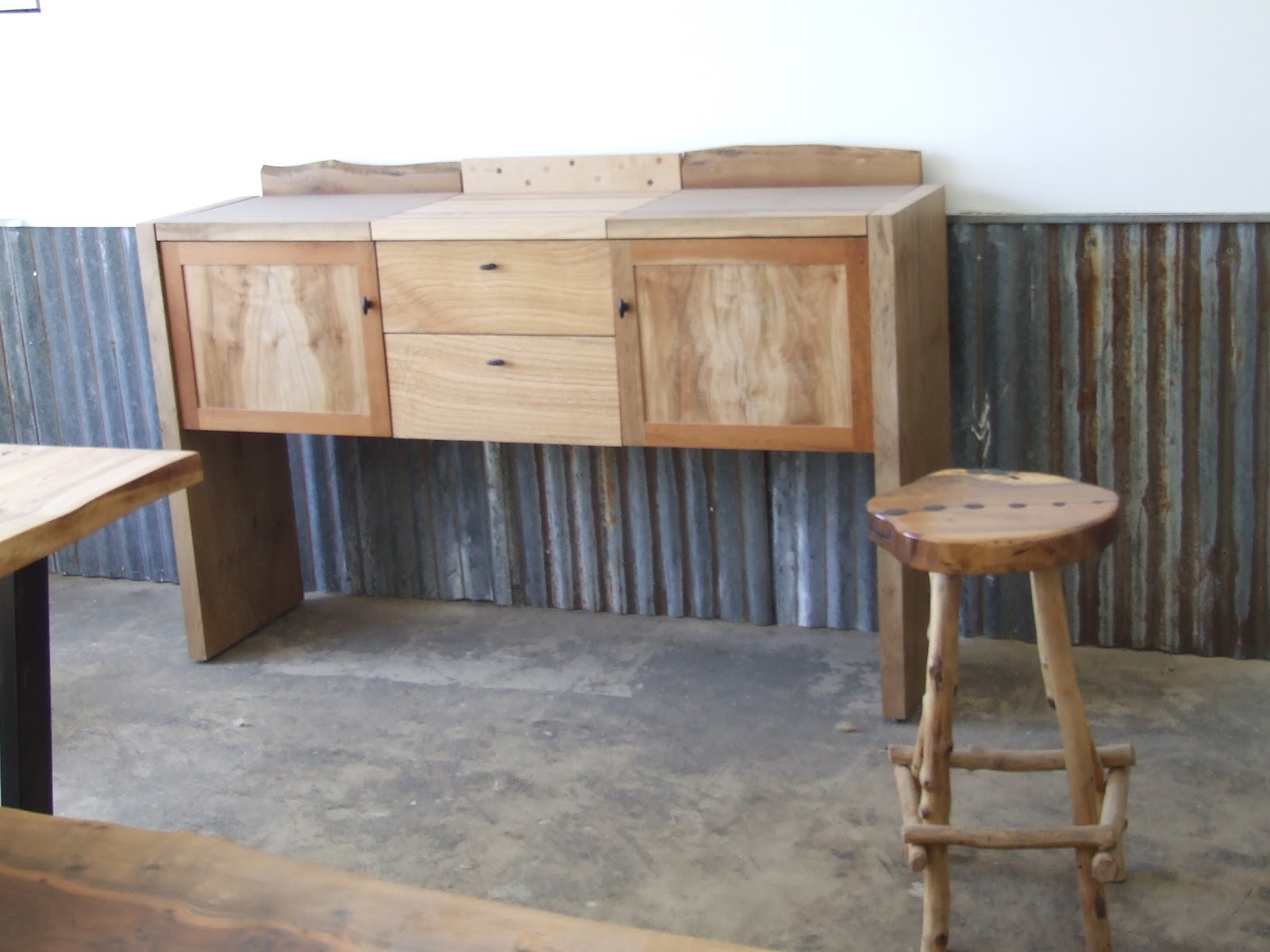
To this... everything is made from reclaimed urban lumber

New Approaches Mean New Opportunities
By Jack Petree
Groundbreaking work by David MacFarlane of Michigan State University’s Department of Forestry should cause those interested in the shape of the nation’s future forest products industry to sit up and take notice.
Billions of Board Feet
Recent work by Dr. MacFarlane indicates the U.S. urban forests are capable of producing annually about 3.8 billion board feet of wood suitable for processing into building products on a sustained basis through efficient removal and processing of dead and dying trees. On an annual basis, MacFarlane calculates, that is the board foot equivalent of the material required to build about 285,000 homes. All that from a resource that all too often has been considered waste to be disposed of in landfills.
In recent years, MacFarlane and other research professionals have participated in a number of efforts aimed at building awareness of, and making better use of, the resource represented by urban forests. The efforts have resulted in a fledgling urban forest products industry with considerable potential to become an important sector of the larger timber industry.
California Urban Forest Products Conference
A The 2011 California Urban Forest Products Conference (a gathering of industry participants in San Francisco) represented one more step in demonstrating the premise that urban forestry is a growth industry sector capable of one day changing the business landscape for harvesters, processors, lumber merchandisers, and end users of lumber and other wood products.
In the first half of the 20th Century, economist Joseph Schumpeter pointed out that while change created by entrepreneurial innovation creates economic growth, it can also lead to the destruction of older businesses, occupations, and approaches to business based on newly outmoded technologies or market conditions; firms not keeping up with the pace of change eventually perish.
Growth Industry
Few industries have seen as much change in recent decades as has the forest products industry. Some sectors of the industry were decimated by the winds of that change, but new industry sectors have seen considerable growth over those same decades. The California Urban Forest Products Conference opened a window offering a view of a forest products industry that may be on the edge of a significant growth spurt.
The ground breaking conference had loggers, academicians, sawmill owners, craftsmen and women, contractors, representatives from state and local governments, and avid members of green activist groups all rubbing shoulders as they explored the potential for working together to promote the vitality, diversity, and health of the urban forest across California. Sponsors of the event included the California Urban Forests Council, the California Department of Forestry and Fire Protection, and San Francisco’s Friends of the Urban Forest, a group dedicated to working with individuals and neighborhoods to plant and care for street trees and sidewalk gardens in San Francisco.
In the past, the concept of urban forestry has mostly been ignored by the traditional forest products industry. The lack of interest is partly based on a realistic appraisal of the difficulties inherent in relying on the urban forest for a dependable supply of fiber but lack of information about the potential the urban forest has in producing fiber to fill the nation’s need plays a part as well.
On the other hand, innovative entrepreneurs, like those attending the California Urban Forest Products Conference have been, in recent years, actively exploring the potential offered by 3.8 billion board feet of available material suitable for conversion to useful product.

Counter tops made from "waste" wood:  Woods Coffee
Building a Business
It is likely to be some years before a strong national urban forest products industry becomes a fully developed and established sector of the larger and more traditional forest products industry.
The California conference featured plenty of material spotlighting the difficulty firms will face in establishing and building a business based on urban forest products. However, based on information put forward at seminars, panels, and other presentations during the three days of the California Urban Forest Products Conference, there are strong indications that rapid growth and increasing stability for the urban forest industry of the future are not only possible, but likely.
While not everyone’s cup of tea, participants in today’s conventional forest products industry might want to take a close look at where the urban based segment of the industry is going as it builds into a significant supplier of lumbers, especially specialty lumbers, to serve the nation’s future needs.
Change is in the air.